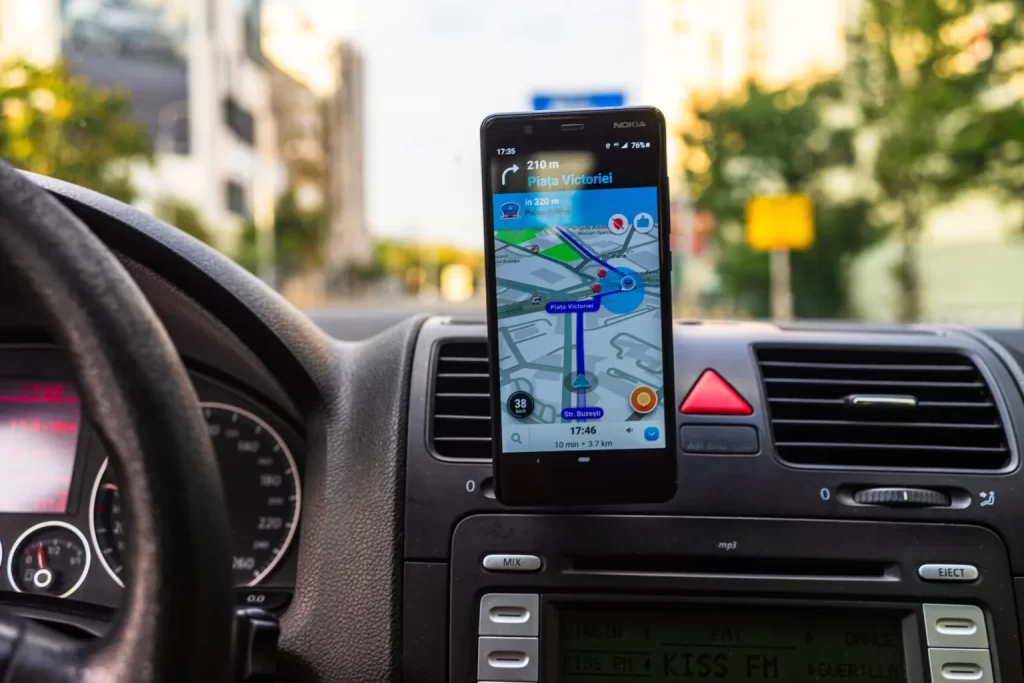
How Waze Helps Drivers Respond to Changing Traffic
You are on your way to the airport when your chauffeur takes a different exit from the one you expected. A route change can feel surprising, especially when you know the area. But the familiar road may no longer be the most practical option.
Navigation apps such as Waze help drivers assess changing conditions ahead. Understanding how these tools work can explain why a journey sometimes follows a different route—and why good travel planning still matters.
How Waze Works
Waze is a community-based navigation app that combines driving data with reports from road users. These reports can highlight congestion, accidents, hazards, and blocked roads.
By analyzing this information, Waze estimates travel times and suggests routes based on available traffic data. A road that looked clear before departure may become congested during the journey, prompting an alternative suggestion.
The value is in seeing beyond the road immediately ahead. A driver may be moving freely while a disruption several miles away is already affecting the remaining journey.
Why Your Route May Change During a Journey
A familiar route is not always the quickest under current conditions. An accident, lane closure, or growing queue can make another road worth considering.
For example, leaving a freeway and rejoining farther along may help bypass a congested section. However, a suggested diversion still needs judgment. Local access rules, safe turning opportunities, and the exact destination entrance all matter.
If a route change concerns you, ask your chauffeur for a brief explanation when it is safe to do so. Knowing the reason can make an unfamiliar turn easier to understand.
What Arrival Estimates Can—and Cannot—Tell You
Waze uses traffic information to estimate when you will reach your destination. That estimate can change as road conditions develop. It is a planning aid, rather than a guaranteed arrival time.
For airport departures, reaching the terminal is only part of the schedule. Baggage drop, security, and boarding require additional time. When arranging airport transportation, share your flight details so pickup planning can account for more than the drive itself.
For corporate transportation, provide the required arrival time and correct building entrance. A navigation estimate to a street address may not account for the time needed to reach reception or a meeting room.
Navigation Supports a Well-Planned Journey
Live traffic information helps, but it can’t eliminate every delay. Allowing time for unexpected conditions remains essential, particularly when your arrival time is fixed.
Ecko Worldwide Transportation coordinates Bay Area journeys around passenger schedules and itinerary requirements. When booking, share any additional stops or access instructions. Those details help turn a destination on a map into a journey planned around where you actually need to be.