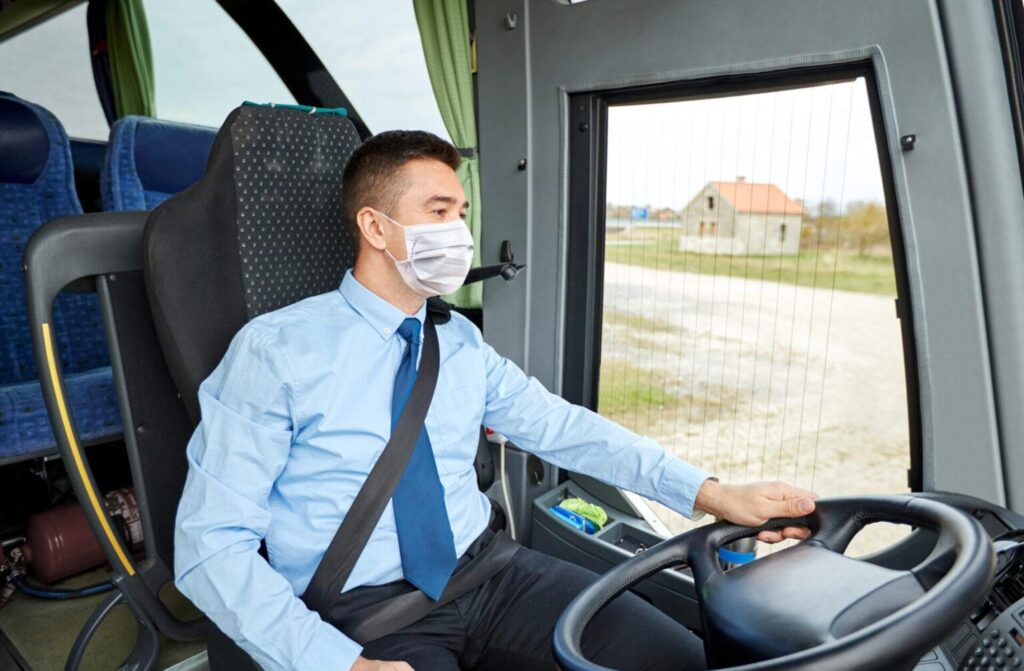
Why Buses Have Strong Safety Practices
Most people don’t spend much time thinking about what it takes to operate a bus or other commercial passenger vehicle safely. A trip may feel like simply getting from one destination to another, but professional passenger transportation involves safety procedures that go beyond everyday driving.
Commercial buses, shuttle vehicles, and other passenger transportation services operate under additional requirements and typically rely on trained commercial drivers, vehicle inspections, and safety-focused driving practices.
Here are some practices that support safer commercial passenger transportation.
Commercial Driver Training
Driving a vehicle carrying multiple passengers requires a different level of responsibility than operating a personal vehicle.
Commercial drivers who operate certain passenger vehicles may need a Commercial Driver’s License (CDL) with the appropriate passenger endorsement, depending on the vehicle and applicable regulations. Obtaining the required credentials involves additional knowledge and skills testing beyond a standard driver’s license.
Professional passenger transportation also requires drivers to understand how vehicle size, passenger loads, stopping distances, traffic conditions, and road conditions affect the way a vehicle should be operated.
The objective is not simply to reach the destination but to transport passengers responsibly throughout the journey.
Pre-Trip Vehicle Inspections
Driver training is only one part of passenger transportation safety. The condition of the vehicle also matters.
Commercial vehicle operators commonly perform pre-trip inspections before beginning a journey. Depending on the vehicle and applicable requirements, inspections can include checking:
- Tires and wheels
- Lights and signals
- Mirrors and windows
- Braking components
- Steering components
- Safety equipment
- Vehicle body and exterior
- Other equipment required for operation
Identifying a potential issue before a vehicle leaves can help prevent a mechanical problem from becoming a larger safety concern during the trip.
Maintaining a Safe Following Distance
Professional driving involves more than following the speed limit.
Maintaining adequate space between vehicles gives a driver additional time to recognize changing traffic conditions and respond appropriately.
Commercial drivers also need to account for the size and weight of their vehicles. A larger passenger vehicle may require more distance to slow down or stop, particularly when traveling at highway speeds.
Avoiding unnecessary tailgating and maintaining a safe buffer can provide additional reaction time when traffic suddenly changes.
Looking Ahead on the Road
Experienced commercial drivers don’t focus only on the vehicle directly in front of them.
They continuously scan farther ahead to identify potential changes in traffic, road conditions, pedestrians, cyclists, construction zones, and other hazards.
Recognizing a potential problem earlier gives a driver more time to respond gradually instead of making a sudden maneuver or hard stop.
This type of defensive driving is useful for anyone operating a vehicle—not just commercial drivers.
Reducing Unnecessary Backing
Backing up is one of the more challenging driving maneuvers, particularly with larger vehicles.
Professional drivers can reduce unnecessary backing by thinking about how they will enter and leave a location before positioning the vehicle. When possible, parking in a way that allows the vehicle to move forward when leaving can improve visibility and reduce the need for reversing.
When backing is unavoidable, drivers should use appropriate precautions and remain aware of their surroundings.
Staying Alert at Intersections
Intersections require particular attention because vehicles, pedestrians, and cyclists can approach from several directions.
Professional drivers need to scan carefully before proceeding through an intersection, especially where traffic controls are limited or visibility is restricted.
Checking both directions and watching for pedestrians and cyclists can help identify hazards before moving forward.
Following Speed Limits and Road Conditions
Safe commercial driving isn’t simply about avoiding excessive speed. Drivers also need to adjust their speed to the conditions around them.
Rain, poor visibility, congestion, construction, road conditions, and heavy traffic can all affect how quickly a vehicle should travel.
A professional driver should leave enough time and space to respond to these conditions rather than relying solely on the posted speed limit.
Safety Starts Before the Trip
Passenger transportation safety isn’t based on one single practice.
It involves a combination of:
- Proper driver training
- Required licensing and qualifications
- Vehicle inspections
- Defensive driving
- Appropriate following distances
- Awareness of surrounding traffic
- Careful maneuvering
- Compliance with traffic regulations
These practices help create a safer environment for passengers and other road users.
Many of the same principles can also be applied when driving a personal vehicle. Leave enough space, avoid distractions, look ahead, follow traffic laws, and give yourself enough time to react to changing road conditions.
For professional passenger transportation, Ecko Worldwide Transportation combines experienced chauffeurs with appropriate vehicles and transportation planning for different types of trips. Contact Ecko Worldwide Transportation to discuss your transportation needs.
Category
- Airport Transportation
- Corporate Transportation
- Executive transportation
- Group Transportation
- OAK
- Other
- SFO
- SJC
- Special Events
- Sports event transportation
- Uncategorized
- VIP and Luxury Services
- Wedding Transportation
- Wine Tours
Related Posts

